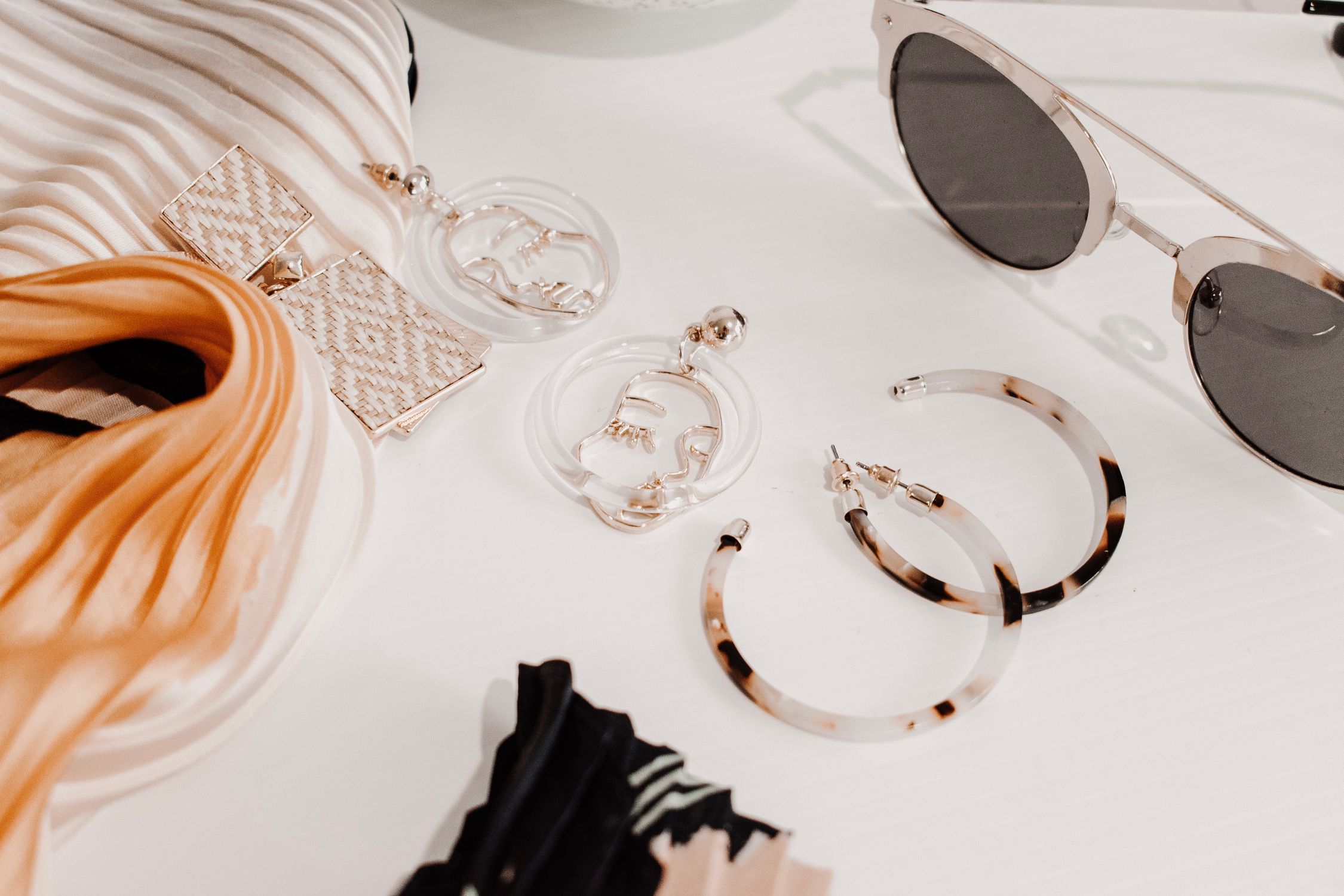
Accessories are most persuasive when they clarify an outfit rather than decorate every available surface. Pick one item to set the pace, then make the rest support its scale, finish, or color.
If the earrings lead
Large or sculptural earrings need visual space around the face. Keep the neckline direct, pull hair behind one ear, and treat eyewear as quiet hardware rather than a second focal point.
Repeat one property, not the exact motif. A silver bag clasp can echo silver earrings; it does not need to copy their shape.
If the sunglasses lead
Frames already create a strong graphic line. Let that line decide the rest: angular frames pair cleanly with a structured jacket, while rounded frames soften a sharp collar. Avoid introducing a second oversized shape at the ear.
If the scarf leads
A scarf can provide color, movement, or warmth, but it rarely needs to do all three. A narrow silk scarf works as punctuation; a broad wool scarf becomes part of the silhouette and should be judged like outerwear.
When the scarf is patterned, choose bag and jewelry finishes from the outfit's base rather than chasing every color in the print.
A practical edit before leaving
- Name the leaderIf you cannot identify the focal accessory in two seconds, there may be more than one.
- Check the soundHardware that clatters, catches knitwear, or fights with a coat collar will be irritating by lunch.
- Check the exitRemove the coat and sunglasses. The indoor version should still look intentional.