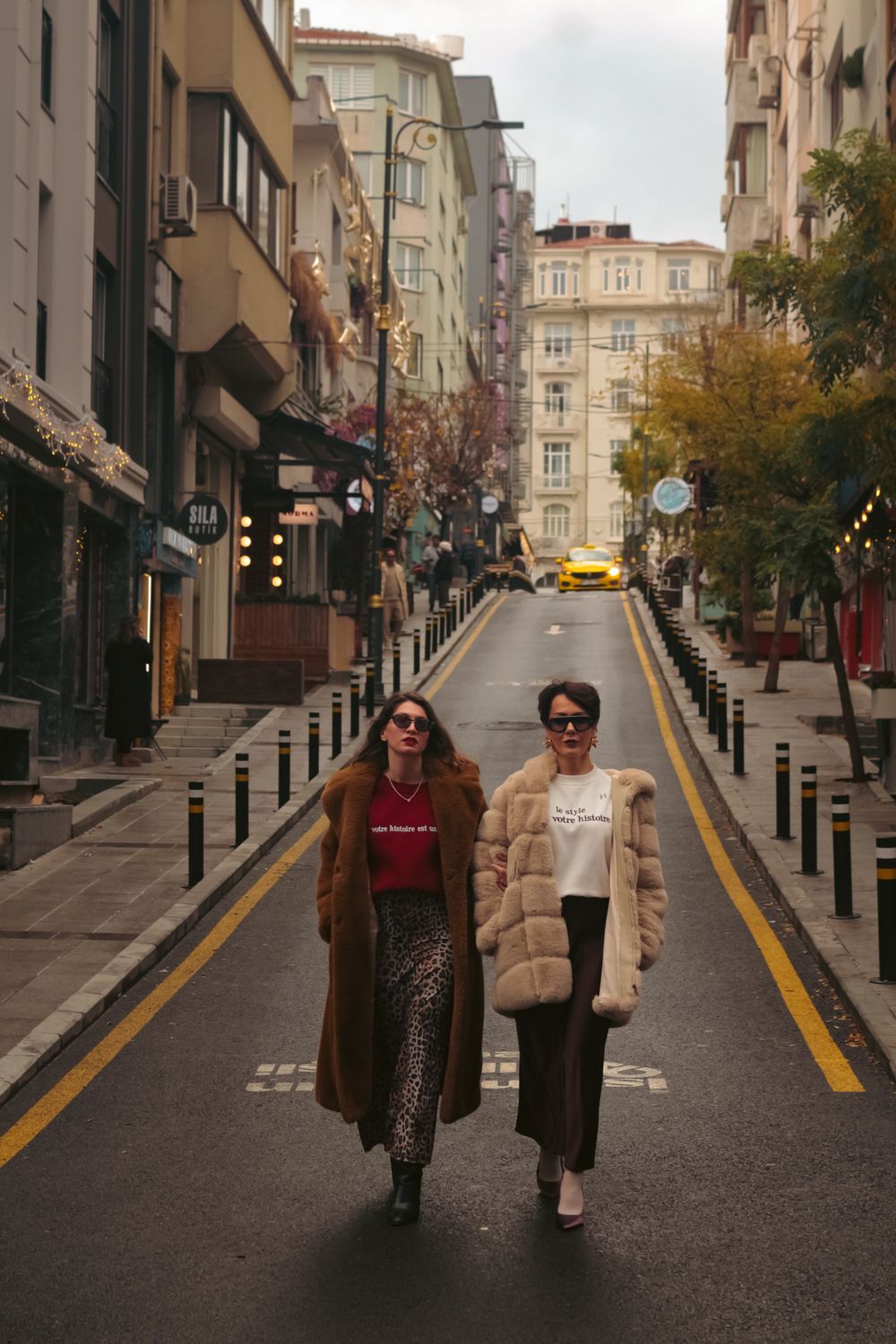
The useful fall outfit is not the one with the most layers. It is the one whose layers can be removed, repeated, and rearranged without the whole look collapsing.
Start with a clean vertical line
Choose a base that reads as one uninterrupted column: a fine-gauge knit with straight trousers, a fitted tee with a midi skirt, or a shirt and jeans in neighboring tones. This is the quiet structure underneath the outfit.
Keeping the base visually continuous gives a coat, scarf, or bag room to carry contrast without making the outfit feel busy. Black is not mandatory; charcoal, oxblood, navy, and dark olive work just as well.
Use five jobs, not five trends
- The baseA breathable first layer that still looks finished when the coat comes off.
- The bridgeA shirt, cardigan, or soft jacket that connects indoor and outdoor temperatures.
- The outer lineA coat with enough room at the armhole and shoulder to layer without pulling.
- The grounded shoeA loafer, ankle boot, or clean trainer that can handle the actual walk.
- The signalOne scarf, earring, bag, or color note that makes the look intentional.
Balance bulk with visible edges
Heavy coats and wide trousers need points where the body reappears. A visible cuff, a defined collar, a short hem under a long coat, or a narrow strip of ankle creates those edges. The goal is not to look smaller; it is to make the silhouette legible.
Before buying another layer, photograph the outfit from the front and side. If the fabric bunches at the shoulder or stacks heavily at the ankle, the problem is fit or length, not a missing accessory.
Repeat the coat, rotate the signal
A good seasonal wardrobe can repeat its most expensive piece unapologetically. Change the scarf scale, earring shape, bag texture, or lip color instead. Repetition is what turns a coat into personal style rather than evidence that you ran out of ideas.